You never really know what taking a chance can accomplish.
In early October of 2021, wanting to introduce myself to the CEO of Ottawa Sports and Entertainment Group (OSEG), Mark Goudie, I sent him a message on Twitter with a simple question.
Had OSEG ever considered hosting a Sensory Aware game for the Ottawa 67’s of the Ontario Hockey League?
Five months later, against the Niagara IceDogs in front of just over 2800 fans on March 14, 2022, the 67’s became the second OHL team to host a Sensory Aware hockey game, following the path of the Erie Otters in 2020.
The afternoon included:
- Eliminated Flashing Lights and lowered sounds
- A dedicated quiet space in the arena
- Reserved seating for guests close to the quiet space
- Sensory kits accessible on site
- Partnerships with local autism charities
Sensory Aware nights in live sports are not a new occurrence. Typically tied in with (or directly called instead) Autism Awareness nights, teams across professional sports have been slowly embracing the idea of a single night dedicated to the idea of sensory awareness and it matters that they do.
If you consider live sports like a swimming pool then for someone with sensory issues, going to a live sport game is like jumping into the pool’s deep end; any adaptations offered (quiet spaces, headphones etc) are like floatation devices, they help, but they aren’t perfect.
Obviously on the whole sports are designed to be loud and bright and overstimulating but a sensory aware game like starting in the shallow end. It essentially allows someone to experience the sport at their own pace before moving towards the deep end of the full live sports experience.
So that’s what teams are slowly learning to do for one night but what about every other night? How are teams approaching the rest of their schedule?
In a world where teams are trying to do everything they can to increase the accessibility of sport, how many are doing so for sensory needs?
So, truthfully, what do you think of improving accessibility in live sports? Your mind logically probably first goes to improving physical accessibility, the additions of things like ramps, elevators and wheelchair-accessible seating and restrooms to venues. Maybe you take it a step further; perhaps you think that a venue should have something like a policy for services animals or improve access for hard-of-hearing fans via closed captioning or Telecommunications Devices for the Deaf (TTD).
There is one form of accessibility, though, that, while it is slowly gaining mainstream understanding, is still far from universally understood in live sports, and that is Sensory Accessibility.
What is Sensory Accessibility?
Broadly, Sensory Accessibility or Sensory Processing Challenges are a broad spectrum of symptoms that manifest as a difficulty in the ability to process and handle information from different bodily senses (sight, sound, touch, taste, smell)
These challenges are unique to individuals and can manifest in ways that can make it very difficult for the person to be involved in the place/area/event that might be causing the issues to appear.
These challenges can be found in those who identify as having-
- Autism Spectrum Disorder
- Attention Deficit Hyperactive Disorder (ADHD)
- Other Developmental Disabilities
- Post Traumatic Stress Disorder
- – But there are many other examples.
So why does this matter? Why should venues and sports organizations take the energy to learn and invest in sensory accessibility? Well, it’s pretty simple, the number of potential fans who could be dealing with sensory challenges is skyrocketing.
In Canada, the estimated number of children diagnosed with autism alone per year is 1 in 66 and in the USA, that number rises to 1 in 44. In its most basic terms, this is something teams need to understand because it will be something they will have to deal with sooner rather than later.
For the last couple of weeks, I have been looking into what I have termed “The State of Sensory Inclusion in Sport.” This meant examining and comparing the accessibility policies and procedures of 312 different sports organizations across 12 different professional sports leagues.
I looked at the:
- NHL, NBA, NFL, MLB, AHL, OHL, QMJHL, WHL, CFL, NBA G League, MLS, and Triple AAA Baseball.
The goal of this exercise was to answer three main questions.
- Are the staff in the venue trained to be able to assist guests with sensory challenges?
- Does the venue offer in-seat sensory accessibility kits?
- . Does the venue offer a separate dedicated sensory room or space
What does it mean to be trained?

To answer the first question using public info was the most difficult as teams might not necessarily have the fact that their staff are trained available to the public.
As such the parameter set for this was done in two broader forms,
- Overall have a published sensory policy on their website?
- Are they certified by Kulture City?
If they just, in general, have a published sensory policy on their website, then it is not verifiable but it is a logical conclusion that their staff are trained in sensory inclusivity.
Separately, Kulture City is the leading organization for developing sensory-inclusive bags and spaces in North America and one of the services they offer is training a venue’s staff as part of their “Sensory Inclusive Certification” so any organization that held that was automatically confirmed to be trained.
What are Sensory Rooms?
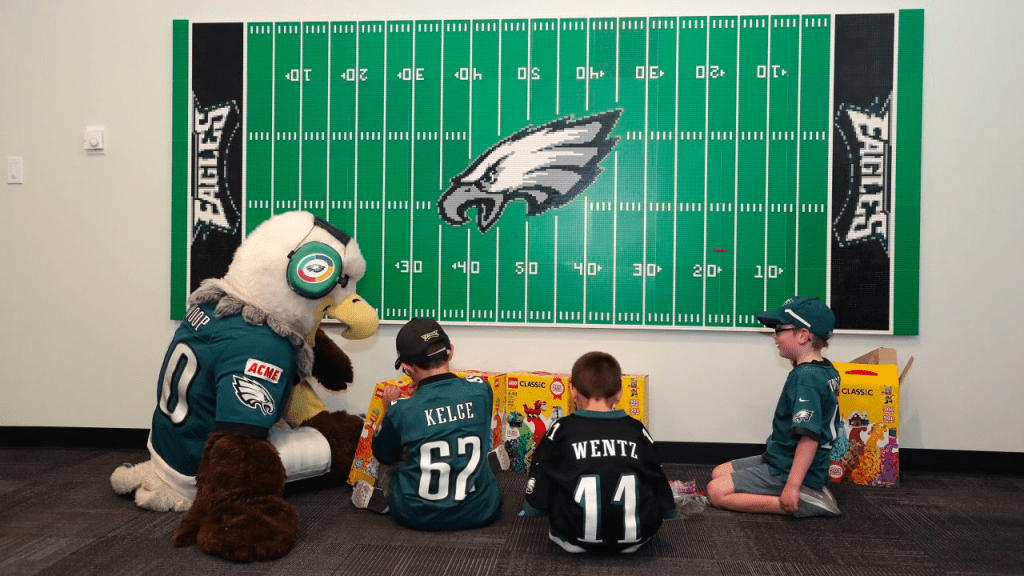
A sensory room is a broad umbrella term for a space within an arena/stadium/venue fully dedicated to guests with any sort of sensory needs. The concept of sensory spaces in live sports venues was first pioneered in the Great Britain in 2014 with “The Shippey Campaign”
Two parents, Peter and Kate Shippey wanted to find a way to for their son Nathan who was autistic to be able to go to games at Sunderland AFC. After a year of discussions and planning with the club the “Nathan Shippey Sensory Room” opened in 2015.
Since then the Shippey Campaign has expanded to include the stadiums for Tottenham, Brighton Chelsea, Manchester City, Manchester United and many more as the Shippey Campaign continues to grow and the concept as a whole has spread around the globe. One of the biggest wins for the campaign will be in December 2022 when thanks to them there will be a sensory space in-stadium at the Qatar 2022 World Cup.
A good definition of what a space is from a sensory space development company – Experia:
A sensory room is a specially designed room which combines a range of stimuli to help individuals develop and engage their senses. These can include lights, colours, sounds, sensory soft play objects and aromas all used within a safe environment that allows the person using it to explore and interact without risk.
It doesn’t have to be overstated the difficulty that live sports can have on the senses.
- High Levels of Sounds
- Overwhelming crowd sizes
- Extreme bright/flashing lights
Those are just some of the challenges that people can face and what a dedicated sensory space can do is essentially allow them to have a sensory break.
What are Sensory Kits?
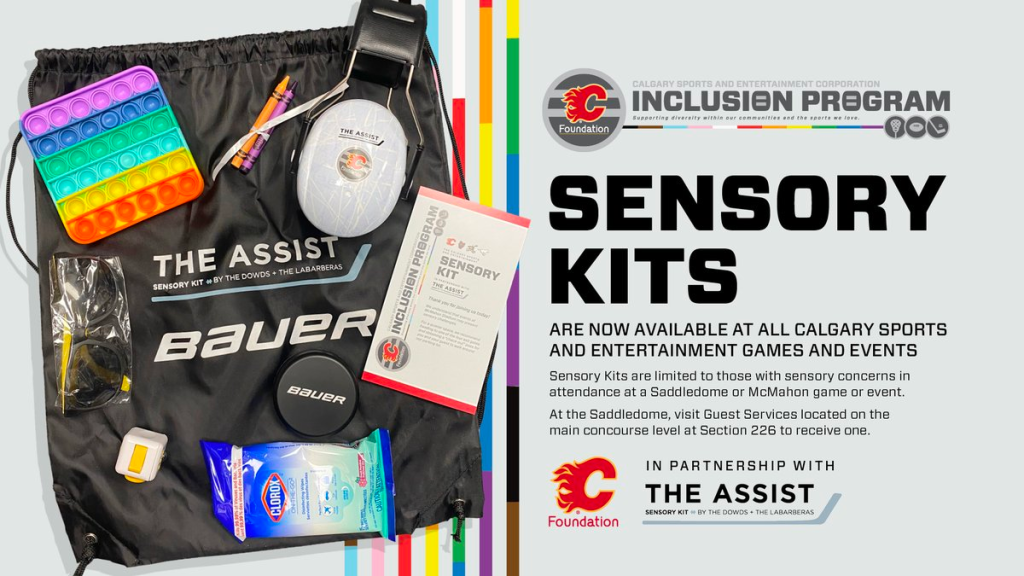
In its simplest sense, a Sensory Kit is like the takeout version of a sensory room. Rather than existing as a physical space where fans can go, a sensory kit is something typically found at Guest Services that can be taken back to your seat and used there while still being able to watch the game.
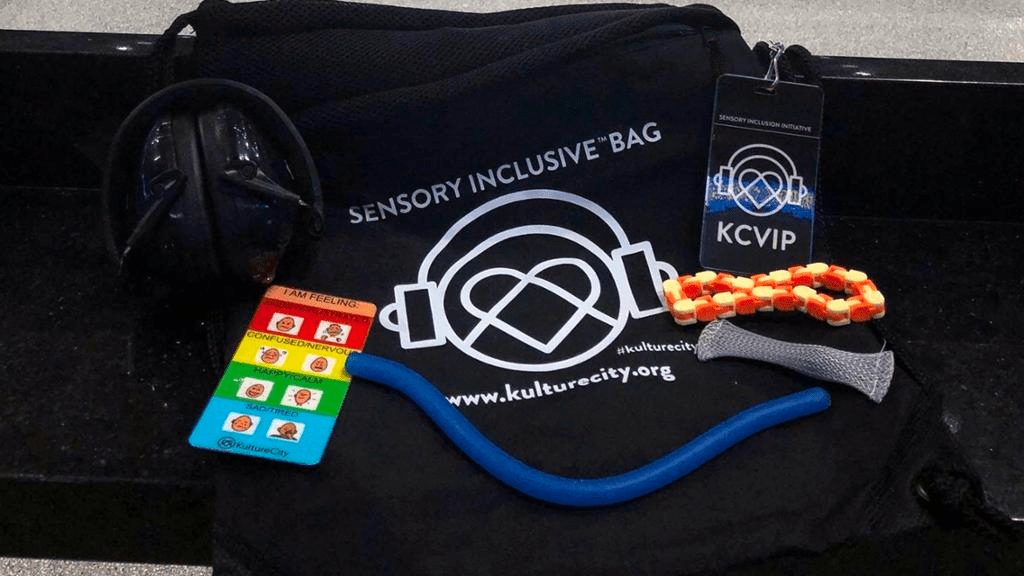
Most sensory kits cover the broad spectrum of senses and include things like
- Noise-cancelling headphones,
- fidget tools,
- verbal calming cards
- weighted lap pads
Another aspect of Kulture City certification is that it provides organizations with access to their specially designed sensory inclusion bags (pictured below)
This explains the background, the second half of this will break down the acquired information.
How this information is broken down
- This information is broken down league-by-league
- It is sorted by the percentage of organizations in the league that can qualify as having sensory inclusive facilities
- To be deemed sensory inclusive in this data an organization must have:
- A dedicated policy/Kulture City certification (YES TO QUESTION 1)
- Offer one or both of sensory bags and/or a dedicated space (YES TO QUESTION 2 AND/OR 3)
- Depending on the success rate, the information will either show the only teams that do qualify as being sensory inclusive, or the remaining teams that do not qualify.
Quebec Major Junior Hockey League (QMJHL)
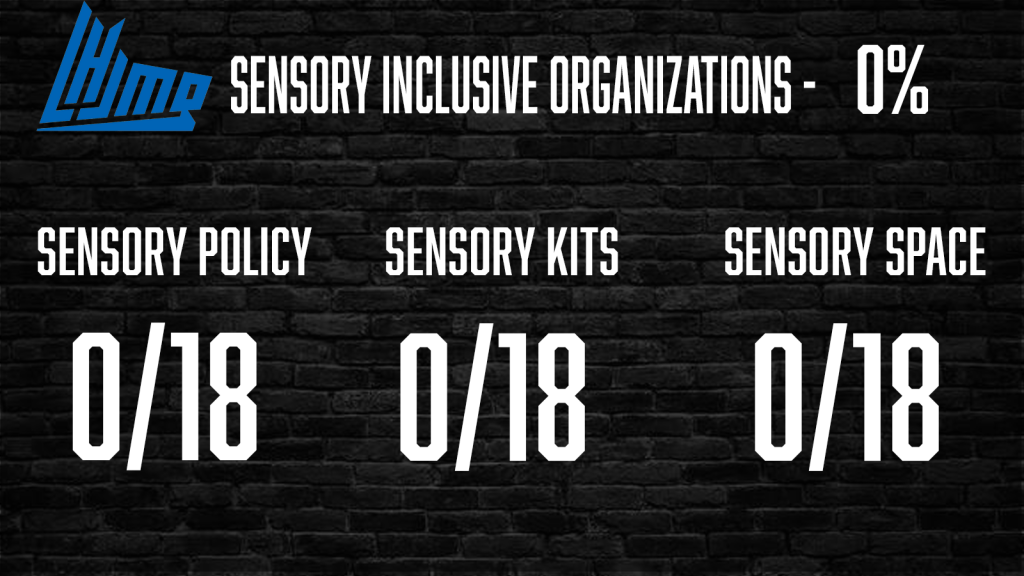
Organizations that qualify as sensory inclusive: 0/18
The only league that put up triple zeros in this study. Barely half of the organizations have publically listed accessibility policies of any kind, let alone ones for sensory accessibility among the teams in the QMJHL.
Ontario Hockey League (OHL)
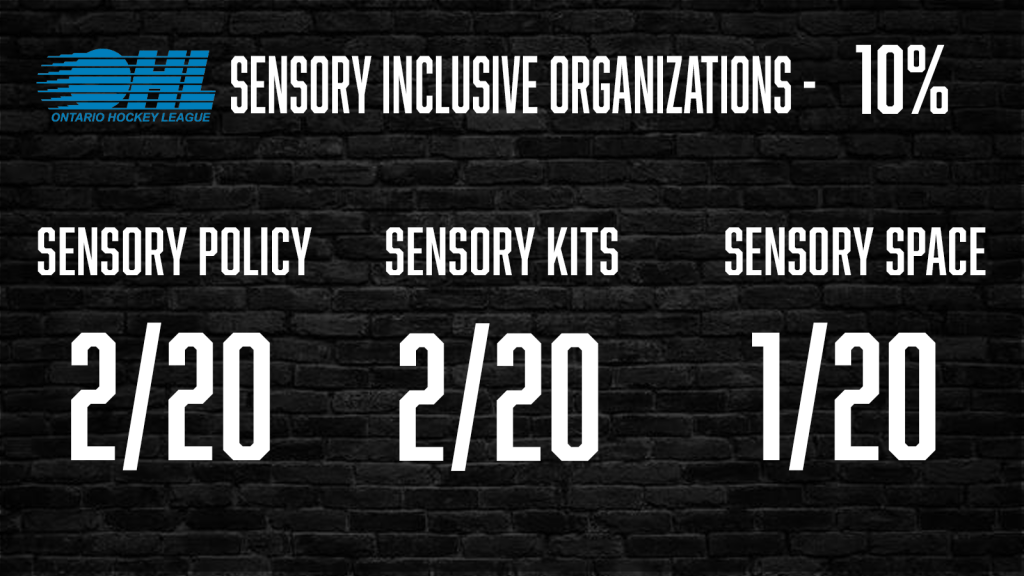
Organizations that qualify as sensory inclusive: 2/20
Only two organizations qualify as sensory inclusive in the Ontario Hockey League, the Ottawa 67’s and the Oshawa Generals, with the 67’s the only organization with a public acknowledgement of a sensory space available in their facility. The Erie Otters were the first team to execute a sensory-aware game in the Ontario Hockey League but do not have a public policy for sensory accessibility.
NBA G-League
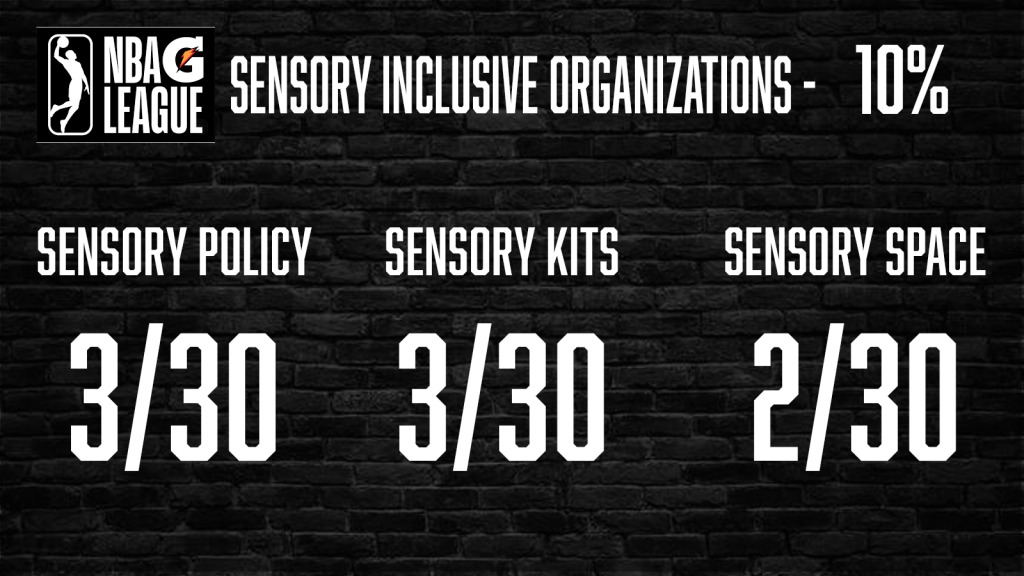
Organizations that qualify as sensory inclusive: 3/30
Compared to its parent organization the National Basketball Association, it was surprising to see how low the NBA G-League landed on this list. The only organizations that listed any sensory policies were the Oklahoma City Blue, the Iowa Wolves and the Fort Wayne Mad Ants.
Western Hockey League (WHL)
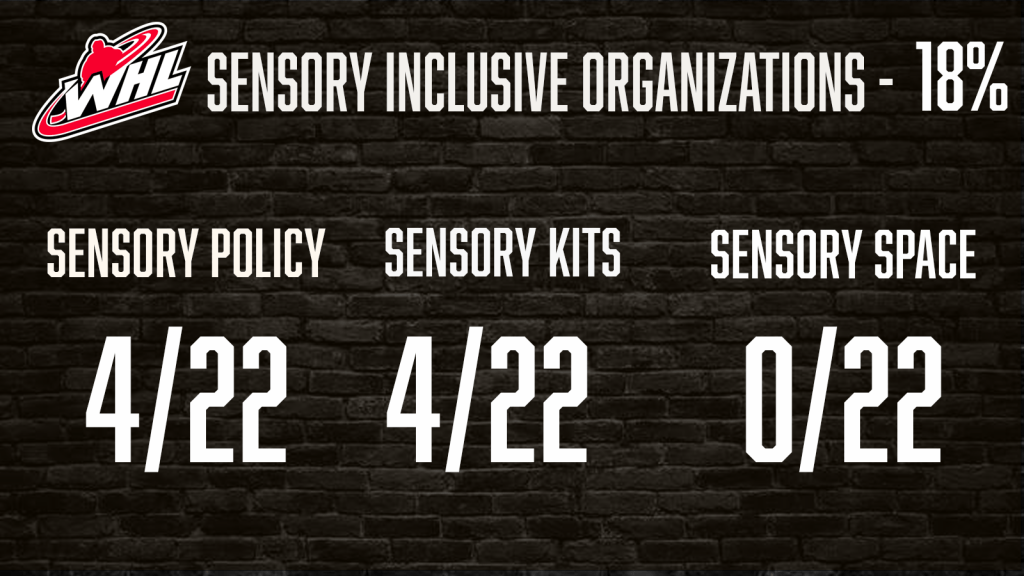
Organizations that qualify as sensory inclusive: 4/22
Note: The original version of this story stated that only three Western Hockey League teams qualify as sensory inclusive, it has since been updated to include the Prince George Cougars
The Western Hockey League is currently the most sensory inclusive of the three leagues that make up the Canadian Hockey League (WHL, QMJHL, OHL). In all honesty, though, that’s mostly due to the ties that they have to higher-level professional leagues. The Calgary Hitmen, Edmonton Oil-Kings and Portland Winterhawks are the three teams to offer sensory kits in the WHL and they are all thanks to sharing facilities with NHL/NBA organizations. The only organization that is a WHL-only team that is sensory inclusive is the Prince George Cougars.
Triple AAA
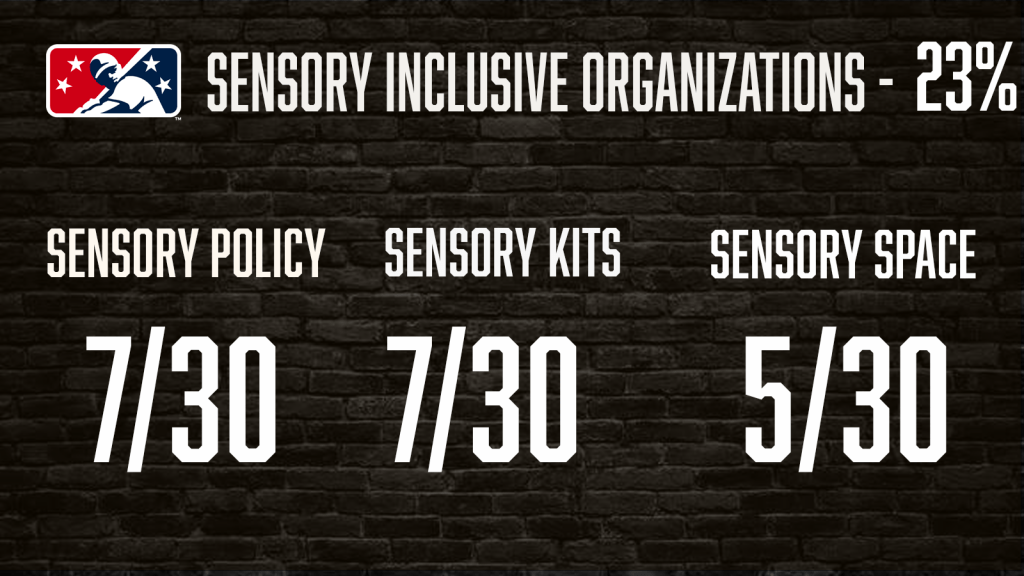
Organizations that qualify as sensory inclusive: 7/30
In 2020, the MLB re-formatted the Minor Leagues and created a new level of 30 teams split into 20 teams in the International League and 10 teams in the Pacific League.
Interestingly, although only seven teams in Triple AAA qualify as being sensory inclusive, all five are yeses for each question, the only professional sports league studied to have that.
The five teams in the International League are
- The Durham Bulls
- The Omaha Storm Chasers
- The Indianapolis Indians
- The Scranton/Willkes Barrie Railriders
- The Worcester Red Sox
The two teams that qualify as sensory inclusive in the Pacific League are
- Albuquerque Isotopes
- El Paso Chihuahuas
American Hockey League (AHL)
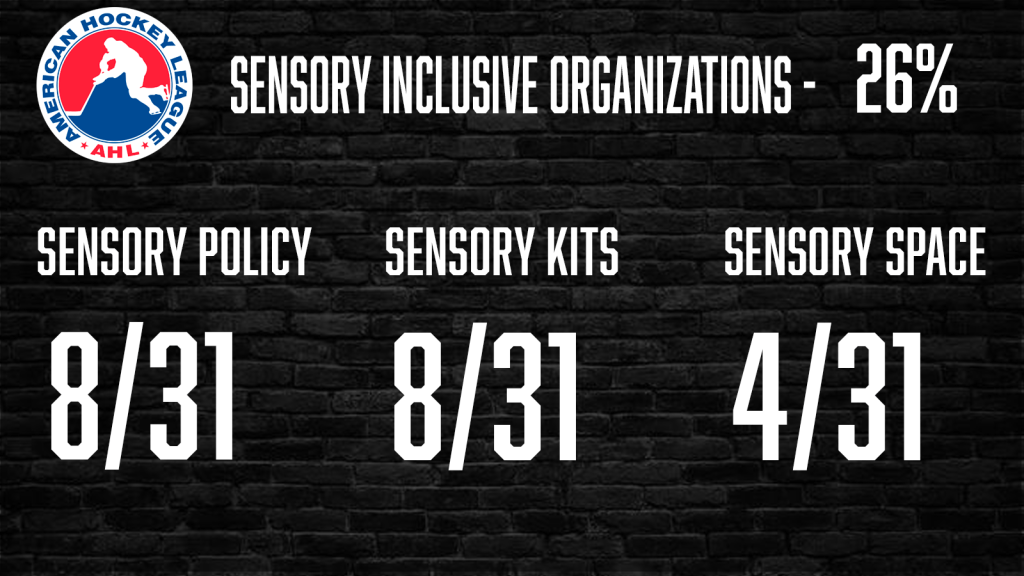
Organizations that qualify as sensory inclusive: 8/31
Similar to the NBA G-League, the American Hockey has a surprisingly limited number of organizations that can qualify as being sensory inclusive.
The eight teams that qualify include
- The Charlotte Checkers
- The Cleveland Monsters
- The Colorado Eagles
- The Hartford Wolfpack
- The Iowa Wild
- The Manitoba Moose
- The Syracuse Crunch
- The Toronto Marlies
With the Marlies, Wild, Eagles and Monsters all offering sensory spaces in their facilities as well.
Canadian Football League (CFL)
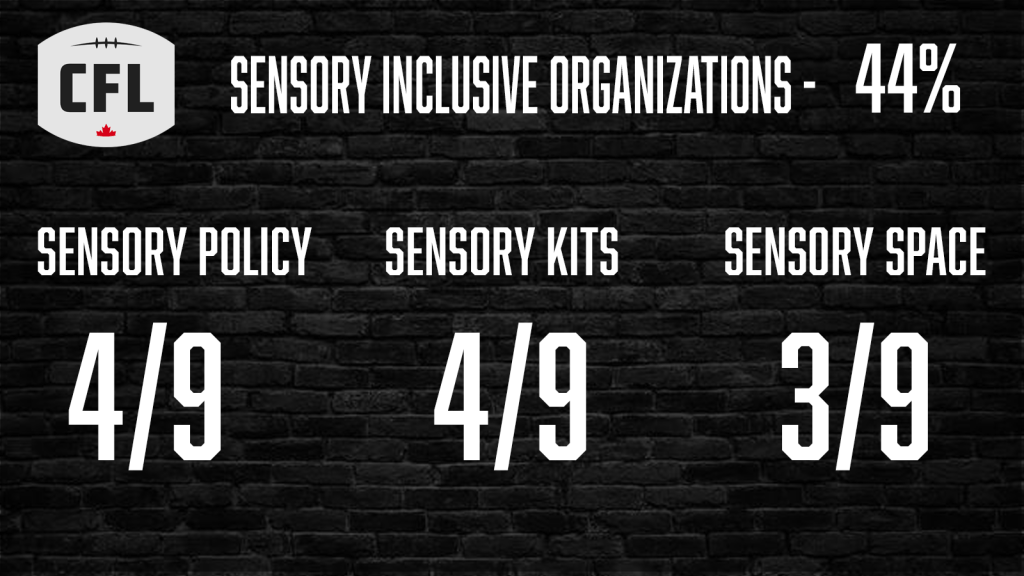
Organizations that qualify as sensory inclusive: 4/9
The Canadian Football is a little complicated.
The Toronto Argonauts, Ottawa Redblacks and BC Lions all have dedicated policies, with the Lions holding one of the broadest autism programs in North America through their partnership with the Pacific Autism Network. The Calgary Stampeders don’t technically have a policy listed on their website but it is listed on the website of the Calgary Sport and Entertainment Corporation (CSEC) Foundation. So they still qualify even though it is not public on their site.
Major League Soccer (MLS)
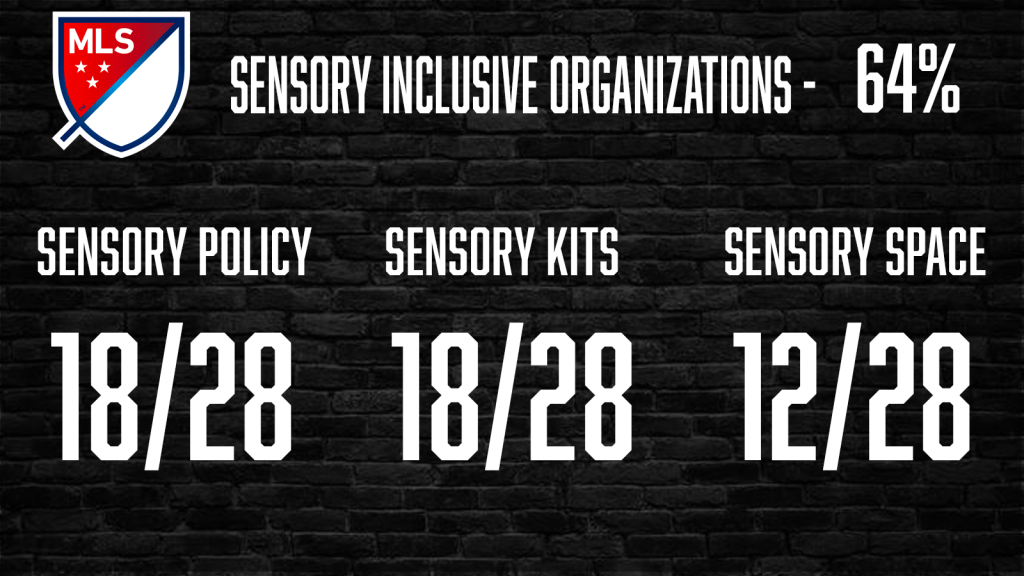
Organizations that qualify as sensory inclusive: 18/28
Major League Soccer has slowly been growing on basically every front and at 64% of teams that qualify as sensory-inclusive, it still has a lot of room to grow.
The ten teams that currently are not qualifiable as sensory-inclusive in the MLS include:
- CF Montreal
- Chicago Fire FC
- DC United
- FC Dallas
- Inter Miami
- LA Galaxy
- LAFC
- New England Revolution
- Philidelphia Union
- Real Salt Lake
National Football League (NFL)
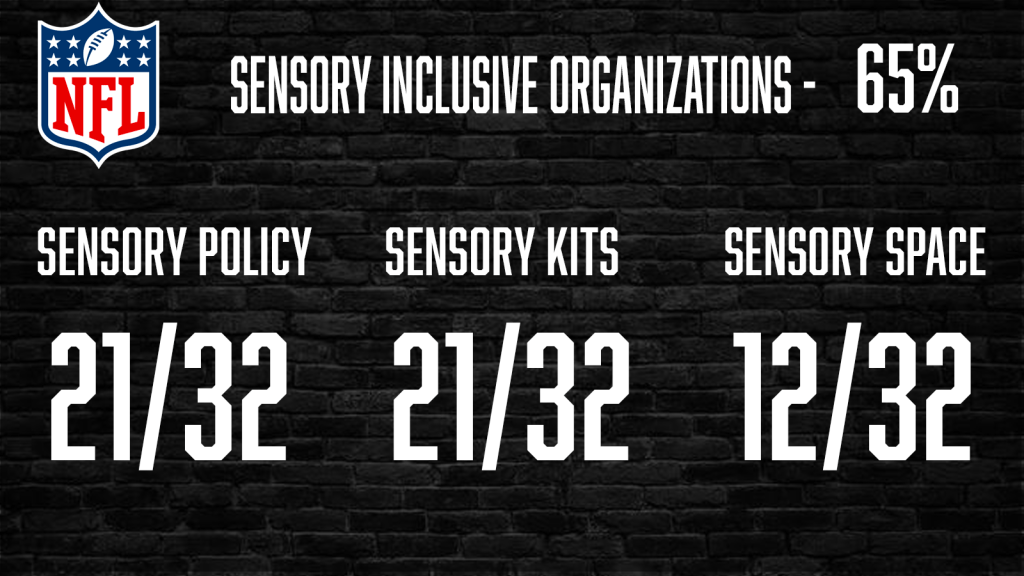
Organizations that qualify as sensory inclusive: 21/32
The National Football League clocks in right around the same as Major League Soccer with another average spread of teams that offer sensory bags vs offering bags and spaces.
The eleven teams that don’t qualify as sensory-inclusive in the NFL include:
- The Arizona Cardinals
- The Chicago Bears
- The Cleveland Browns
- The Dallas Cowboys
- The Detroit Lions
- The Green Bay Packers
- The Houston Texas
- The Indianapolis Colts
- The New England Patriots
- The San Francisco 49ers
- The Tampa Bay Buccaneers
- The Washington Commanders
Major League Baseball (MLB)
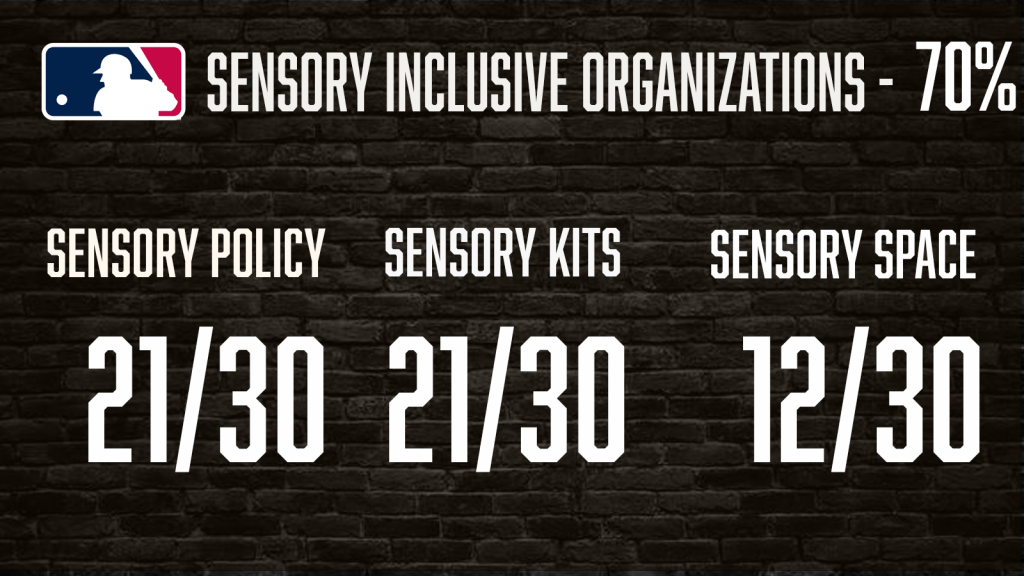
Organizations that qualify as sensory inclusive: 21/30
The MLB is the most unique of the Big Four leagues, as for a lot of their teams, the qualifications as a sensory inclusive depend on how tightly to the letter the idea of sensory kits needs to be held.
Officially only 9 of the 30 MLB teams offer “dedicated” sensory kits but the other 12 offer noise-cancelling headphones and they have dedicated sections on their websites promoting them so it can be fair to qualify them as sensory kits.
The ten teams in Major League Baseball that currently don’t have sensory inclusive policies at all though according to public information include:
- The Baltimore Orioles
- The Colorado Rockies
- The Houston Astros
- The Los Angeles Angels
- The Milwaukee Brewers
- The Philadelphia Phillies
- The San Francisco Giants
- The St Louis Cardinals
- The Texas Rangers
National Hockey League (NHL)
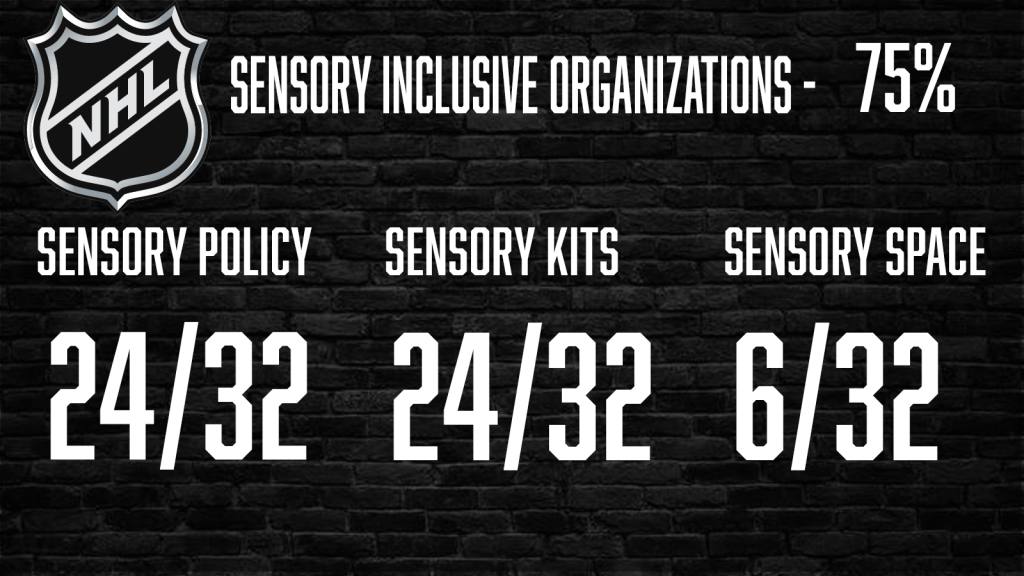
Organizations that qualify as sensory inclusive: 24/32
The NHL is a bit complicated to explain. The recent addition of “The Assist” from Paige Dowd and Kodette Labarbera means that the Montreal Canadiens for example might qualify as sensory inclusive but according to the public information available currently don’t. The NHL is also fascinating in that it holds the largest gap between organizations that offer sensory bags and organizations that offer sensory spaces.
The eight teams that don’t currently qualify as sensory-inclusive based on public data include
- The Boston Bruins
- The Dallas Stars
- The Florida Panthers
- The Montreal Canadiens
- The New York Rangers
- The Ottawa Senators
- The Pittsburgh Penguins
- The Tampa Bay Lightning
National Basketball Association (NBA)

Organizations that qualify as sensory inclusive: 26/30
The NBA is currently the most sensory-inclusive league and it is unsurprising. It was after a terrible experience at an Autism Awareness Night in 2016 for the Cleveland Monsters of the AHL at Rocket Mortage Fieldhouse in Cleveland, that a parent reached out to the people at Kulture City, who had never entered the live sports realm, to enquire about sensory certifying the home of the Cleveland Cavaliers, and Kulture City has since expanded to 65 teams domestically.
Interestingly, since many NBA and NHL teams share facilities, only two of the seventeen facilities that have sensory spaces in the NBA are in arenas that are split with NHL teams.
The four teams that don’t qualify as sensory inclusive currently?
- The Boston Celtics (in the same facility as the Boston Bruins)
- The Dallas Mavericks (in the same facility as the Dallas Stars)
- The Minnesota Timberwolves (although that might change soon)
- The New York Knicks (in the same facility as the New York Rangers)
So what does this mean?
Ultimately how to look at this information really depends on what is defined as success.
If success is just the fact that sensory accessibility as a concept exists, then the majority of this data is a win. If success is creating a world in which sensory accessibility is held to the level of other forms of accessibility that are enshrined into the legal protections then it less successful, but that is also a very high bar to clear.
All in all, though, it’s fair, a dedicated sensory space in a facility is a difficult ask for teams to execute, facilities don’t always have a space that can be transformed like that. When it comes to sensory kits though, to goal of anything less than 100% for every league is too low.
To use an example, a single “Sensory Support Kit” from Autism Canada (pictured below) could be ordered for $75 a piece. If every single organization in the Canadian Hockey League (the OHL, QMJHL and WHL) that didn’t have sensory kits were to pay for 15 of them each, that would be a capital investment of just under $61,000 combined or barely $1200 an organization.
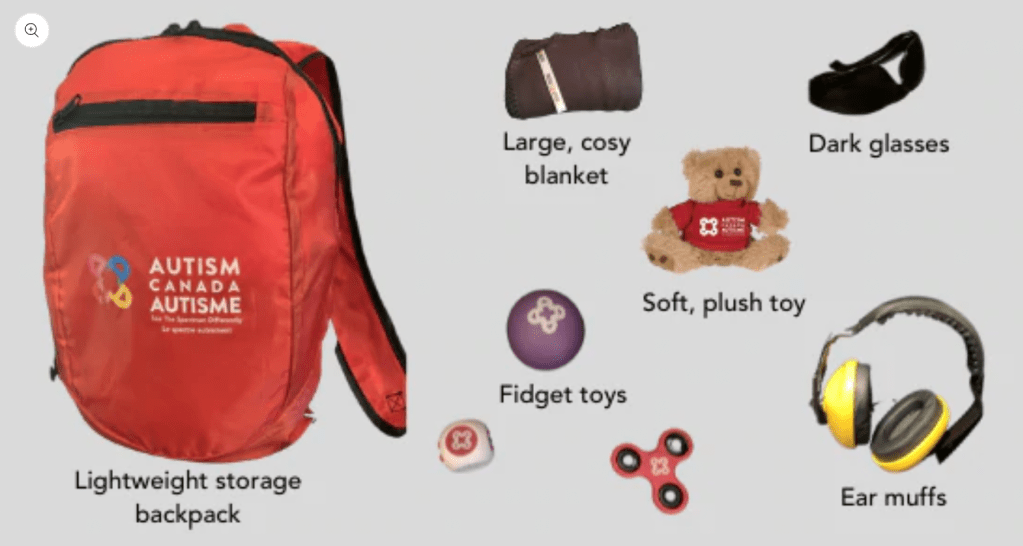
Really at the end of it, success comes down to how the idea of increasing accessibility in live sport is valued.
Taking into account the fact that 312 teams do not equal 312 venues as there are doubles in leagues as well as across organizations, 137 teams could qualify as sensory inclusive out of the 312 teams that were examined.
That’s a success rate of 44%,
Is 44% good enough for professional sports? Is anything more than zero good enough? That’s the question, but the more sensory inclusion is advocated for the higher than number can grow.
At the very least, when you take a chance, you never know what you can accomplish.
 Richard Coffey's Portfolio
Leave a comment